
Name-Based Case Searches
Dooly Superior records sit behind an account wall. The public route does not offer a guest name-search form before login. So a name-based Dooly County case search there starts with registration. Georgia Courts E-Access lists Dooly Superior and routes users to PeachCourt. Registration is free, the provider says. The sign-up form still collects account details rather than a party name or case number.
Once you can lawfully search, enter the party name exactly as the filing or notice spells it. Then confirm the result by court, county, case type, and filed date. Common names often return more than one hit. A citation name search is a separate task from a Superior case search. It may run through a city or traffic vendor instead.
- Identify the court class and the county named on the notice.
- Open the provider route for that court and authenticate if required.
- Enter the party name exactly as the court record gives it, then narrow by court or case type if the provider offers that choice.
- Compare the case number, filing date, parties, and status before opening an event or image.
- Ask the clerk when no result matches the notice or when an image is not available.
| Field label | Type | Required | What research showed |
|---|---|---|---|
| Last name | Text | Not observed | No public case field appeared before PeachCourt login. |
| First name | Text | Not observed | PeachCourt registration has a first-name field, but it creates an account. |
| Court or case type | Selector | Not observed | Georgia Courts exposes a Dooly Superior provider link, not a result filter. |
| Case number | Text | Not observed | Use the identifier printed by the court when the account view permits it. |
Dooly Superior Provider Route
Think of the Georgia Courts E-Access page as a switchboard, not a search engine. It lists Dooly Superior and forwards searchers to PeachCourt. A warning notes that an account is required. The state side offers no name box, no case-number field, no date range, and no export or pagination controls.
PeachCourt's access screen shows fields for email, password, forgotten-password help, and registration. Attorneys and non-attorneys alike can register without a fee, the vendor says. Still, there is no public view of a Dooly result set before login. After signing in, note what actually appears: a case index, docket events, a file-stamped document, or an unavailable image.
This access gap deserves careful wording. Dooly's exact result columns, sort order, local case-number prefix, and export behavior are unknown outside an authenticated account.
Case Number Searches
Searching by case number is the cleanest way to tell apart two matters that share a name. But no verified prefix or sequence for Dooly numbers is published. Guessing a format is a mistake. Use the exact identifier from the citation, summons, complaint, bond, order, or clerk correspondence, digits and punctuation intact.
Dooly case number as printed on the notice remains the safest local reference. That holds until a lawful provider account reveals the real format. When a search fails, ask two questions. Which court holds the case: Superior, Probate, Magistrate, Juvenile, Vienna, or Unadilla? Do punctuation or leading zeroes matter in that court's numbering?
Cross-check whatever comes back. The court, case type, filing date, and last activity should all agree with the notice. A number that lands in a different court is not a match. A familiar party name does not change that.
Registration Fields Before Case Fields
PeachCourt's registration page asks for plenty. It wants last name, first name, email, a confirmation email, password, a confirmation password, a secret question and answer, CAPTCHA, and agreement to terms. Every one of those fields builds account access. Not one of them filters a Dooly case.
That is why a reader can face a full form and still have no way to search by name. The registration page says users can initiate a case or file into an existing one. The search itself stays behind login. Confirm what an account actually permits before assuming the result view is free or complete.
An account does not make PeachCourt the official custodian, either. The official record stays with the Dooly court and clerk. Read the vendor's terms and help pages beside the county's own contact information.
Case Search Results Explained
A Dooly case result can identify a case while showing only part of its record. Treat the expected fields as a reading checklist. They are not a promise that every field appears in the provider view.
| Case number | The court identifier from the case header. Match it to the notice. |
|---|---|
| Style and parties | The case caption and party roles, with counsel or self-represented status where shown. |
| Case type | Criminal, civil, domestic, probate, or another court category. |
| Filed date | The date the initiating filing or citation was accepted. |
| Status | Pending, disposed, closed, stayed, or another provider status that needs context. |
| Latest event | A filing, order, setting, disposition, or update that should be read with its document. |
A listed status can lag behind a signed order. A document image can be withheld or simply absent. When the result cannot say whether a case is pending or a setting still stands, ask the custodian directly.
Search Result Versus Document Image
PeachCourt's document-help page says file-stamped documents from many State and Superior courts may be online. Many dockets reach back to 2005. Not everything is there. Sealed, adoption, and unexecuted proposed-order materials are excluded. So a docket event can be public while its linked image is not.
Before requesting an official copy, gather the court, case number, document title, and date. Then decide what you need: inspection, a plain copy, an electronic image, or certification. The Superior Clerk page posts no current copy-fee schedule and no email request form. Ask the office rather than assuming the vendor price is the clerk's fee.
The PeachCourt document help page reports a $0.50-per-page image fee plus a small convenience fee. Confirm the current charge and Dooly coverage once you are logged in.
Two Ways to Search: County and State
Georgia keeps a statewide directory of court providers, but no single public statewide trial-court search replaces county or provider access. Each route plays a distinct role in a docket search. Understanding that split saves dead ends.
| Georgia Courts directory | Dooly provider or local office |
|---|---|
| Shows participating court and provider routes. | Holds or routes the Dooly case, docket, citation, or file. |
| Lists Dooly Superior and sends the user to PeachCourt. | PeachCourt requires an account; local courts may use a clerk or city vendor. |
| Useful for identifying court class and provider. | Best for a known Dooly case, date, document, or copy request. |
| Not a uniform results database. | May have gaps, access limits, image fees, or no public web search. |
Pick your route with the statewide directory, then verify the actual record with Dooly's custodian.
Dooly Citation Search Is Separate
Traffic tickets in Dooly County run on their own track. The Probate citation page warns that a citation may need 7 to 10 days before it shows up in PayYourTix. The lookup there can display the fine, the court date, and the charges. So if your ticket just came out, patience is part of the process. One more caution: this route covers traffic citations only. It is not a general Dooly Superior case search.
There is no statewide citation database either. What a vendor asks for depends on the court that issued the ticket. Some want a name, city or county, date of birth, or citation number. Vienna runs a separate GovernmentWindow route. Unadilla posts a City Court schedule on its public page. It offers no case-search fields, though.
When a citation turns into a criminal case, figure out where it landed. It may sit in Municipal, Magistrate, or Superior Court. The traffic page walks through that split in more detail.
The Georgia Courts traffic locator page lays out this no-central-database route in full.
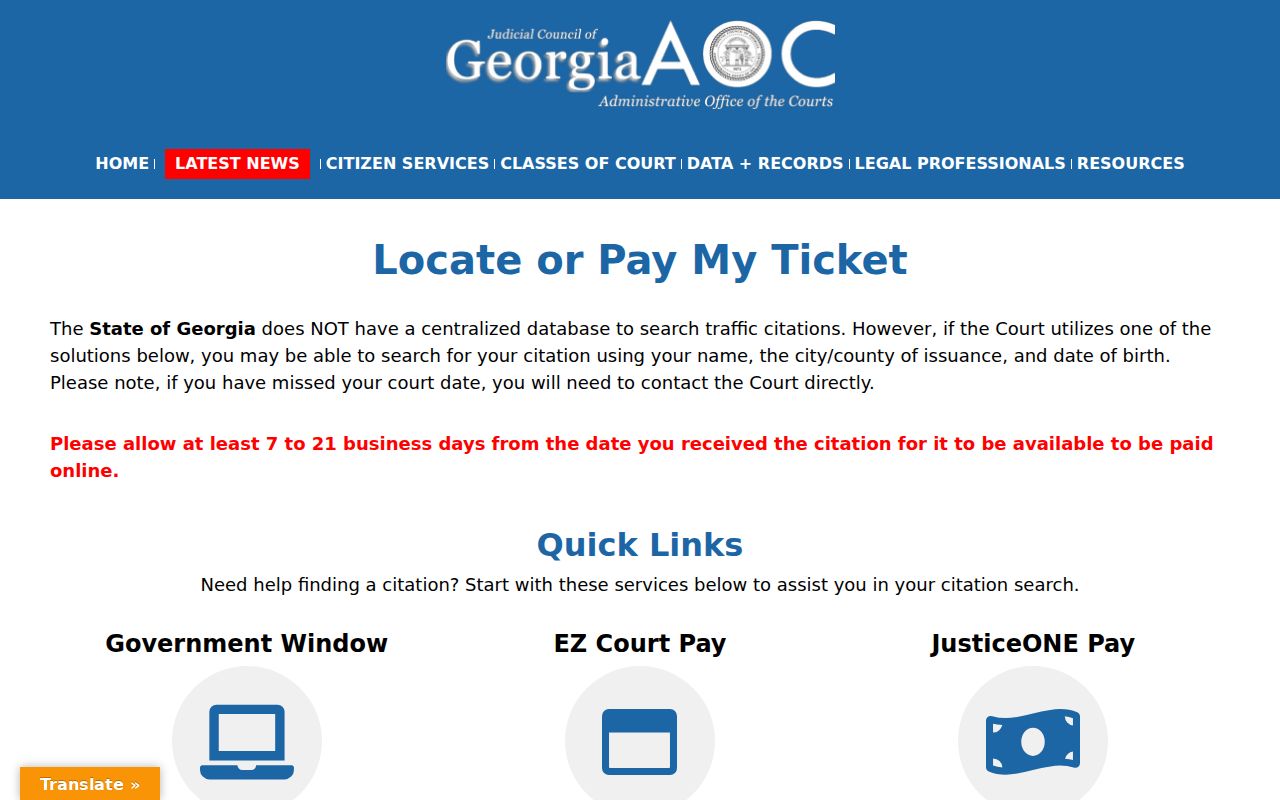
A statewide one-box citation search does not exist in Georgia. The traffic locator makes that plain. Citations live with the individual courts. A Dooly citation must be traced court by court. The Georgia Courts municipal-court directory is one more way to check that route. It is not an individual Dooly case search, though. What it does is separate a city-court listing from the case record that the city court itself holds.
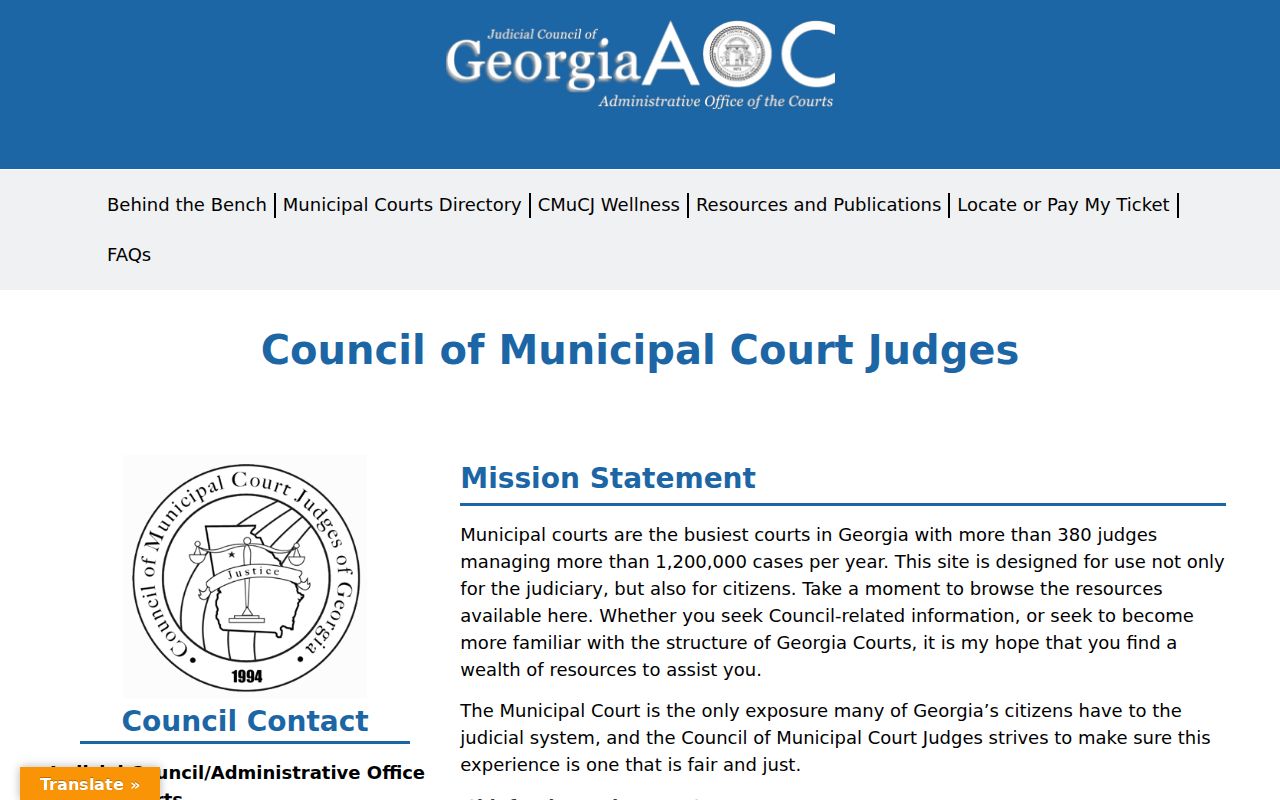
A directory page can sort a Dooly County case by category, and that is its real value. The case number, the filing date, and any request for documents still run through the clerk of court.
Which Cases Stay Restricted
Some matters never show up in a public Dooly search. Juvenile records, sealed filings, protected identifiers, adoption materials, and certain restricted criminal-history information are held back. Dooly Probate adds a note of its own. Wills deposited for safekeeping stay sealed in the vault. So a partial result can mean three different things. The case may be restricted. The image may be unavailable, or the provider may simply not carry that document.
Uniform Superior Court Rule 21 sets out the framework for public access and its limits. For juveniles, JDEX is an authorized information system rather than a public Dooly case search. If a request is denied, ask the custodian which rule or statute applies.
When a Dooly Case Is Not Visible
Start with the basics before assuming a Dooly County case is sealed. Check the identifier, the court class, and the filing date. Then call the clerk. The case may be waiting for indexing. It may be sitting in another office, transferred, restricted, or held only on paper. A public Open Records request can seek an existing calendar, register, log, or export. The agency cannot be forced to build a new analysis that never existed.
The current Dooly Superior Clerk page lists an office address and phone. It posts no public search form. That makes a direct call the fallback. Use it whenever PeachCourt shows no match or a court date is near. Keep the question tight. Name the case number and the date range. Say which document you need.
The Georgia Courts operating-guidelines page is where the local court list comes from.
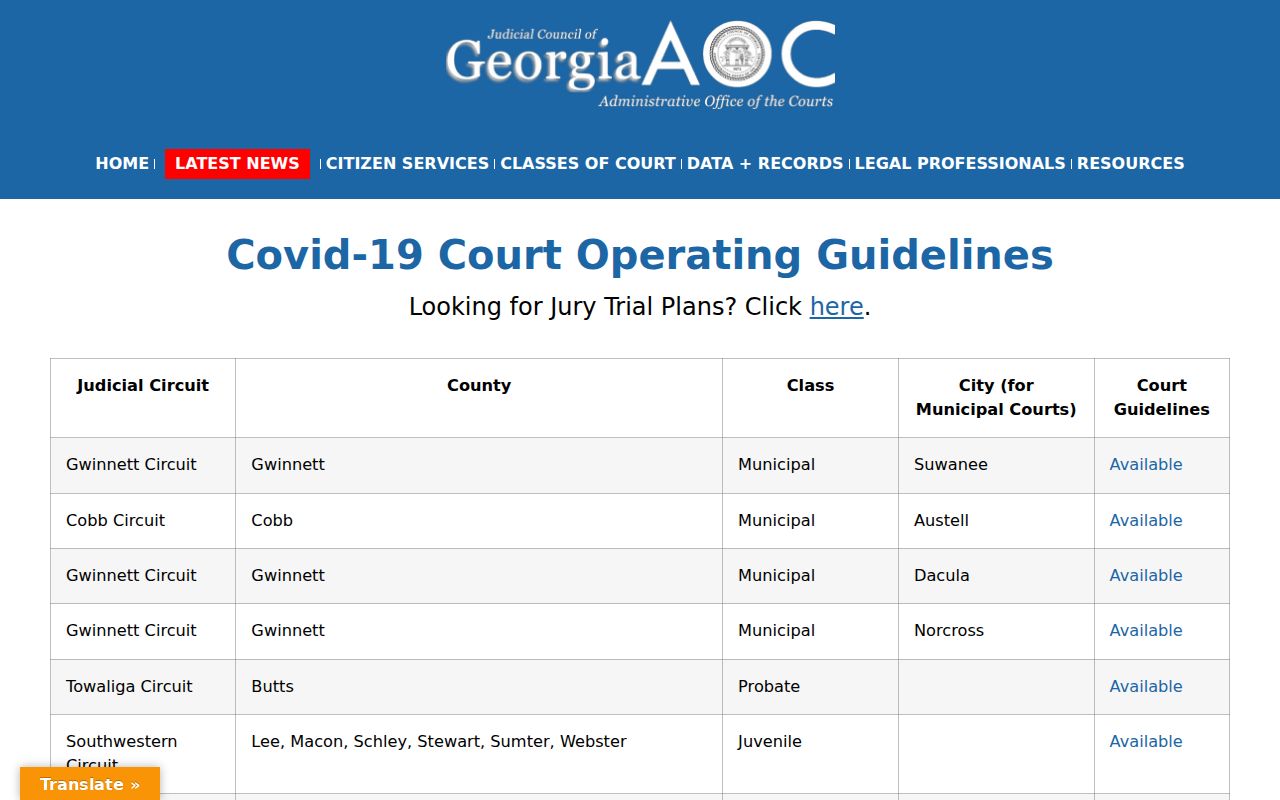
The state's operating-guideline table names Dooly Superior, Vienna Municipal, and Unadilla Municipal. Treat it as a court listing only. It will not return any individual case result.