
Dooly County Civil Docket Searches
Begin a Dooly Superior civil search at Georgia Courts E-Access to Court Records. The directory lists Dooly Superior. It then hands the user off to PeachCourt. That state page requires an account. So there is no open name or case-number form on it.
Gather the basics before searching. You will want the case number, party name, court class, filing date, and document type. These are not interchangeable. A complaint, a judgment, and the actual document image are three different things. If your matter is an estate, a guardianship, a Magistrate claim, a city ordinance case, or a vital-record request, use that office's route rather than forcing it through the Superior docket search.
- Identify Dooly Superior, Probate, Magistrate, or another court from the notice or filing.
- Select Dooly Superior in Georgia Courts E-Access when the case belongs to Superior Court, then authenticate at PeachCourt.
- Search with the exact case number when available, or use a party name and confirm the court and case type.
- Read service, pleadings, motions, settings, orders, judgment, and appeal entries as separate events.
- Ask the custodian for a plain or certified copy when an image, exhibit, or final order is not online.
Superior Versus Magistrate Civil Limits
Dooly Superior Court is the broad civil route. It covers general civil suits, property matters, domestic-relations cases, and whatever else Georgia reserves to Superior Court. Magistrate Court handles smaller claims. Georgia's public court guide places Magistrate civil jurisdiction at $15,000 or less. Dispossessory and related proceedings fit there too, in the statewide framework. Ask the clerk before you file or search. The clerk can confirm the right court and claim route.
Dooly Probate Court keeps estates, wills, guardianships, and special proceedings. Its local page says records reach back to 1875. Most are public for research. That is a separate custody system from Superior. No Dooly State Court provider appears in the state and county materials.
A city traffic or ordinance case is not a general civil docket either. The court class printed on the first filing or notice matters. It keeps a civil docket search pointed at the right court.
Civil Dockets: What They Show
PeachCourt's public screen sits behind a login, so its Dooly civil labels are visible only inside an account. The fields below still describe what matters in any civil case record and what each event means. Here is what a reader should look for and how to read it.
| Case number | The unique identifier from the clerk, summons, or court notice. No Dooly civil prefix was verified. |
|---|---|
| Parties | Plaintiff and defendant, or petitioner and respondent, with service and counsel entries where shown. |
| Initiating filing | Complaint or petition that starts the case. The docket line is not the full pleading. |
| Responses and motions | Answer, counterclaim, motion, discovery, mediation, pretrial, and other filings as entered. |
| Outcome | Dismissal, default, judgment, order, satisfaction, appeal, or another status that affects the case. |
An entry may list a document title and date while showing none of the text. The clerk can still hold the record even when a vendor image is unavailable.
Civil Filings Through PeachCourt
Georgia's current e-file chart marks Dooly Superior Court mandatory in the PeachCourt column. Both attorneys and non-attorneys can register. But the public access screen shows login fields before any case search appears. The vendor's own terms and help materials state a simple point. Official records stay with the courts and clerks.
Its document help page reports a long reach. File-stamped documents from many State and Superior courts may go back to 2005. Not every document is online, and sealed and adoption materials are excluded. An image may cost $0.50 per page plus a convenience fee. Treat these as provider statements, and verify Dooly coverage inside the account.
Missing civil image? Write down the case number and document title. Then ask the Superior Clerk whether the paper file, a redacted copy, or an existing electronic record can be inspected. The Dooly docket search can help locate a case. It cannot promise a document image.
For a citation handled locally instead, see the Dooly Probate citation-information page. It explains that separate route. That includes what the court requires and how to respond.
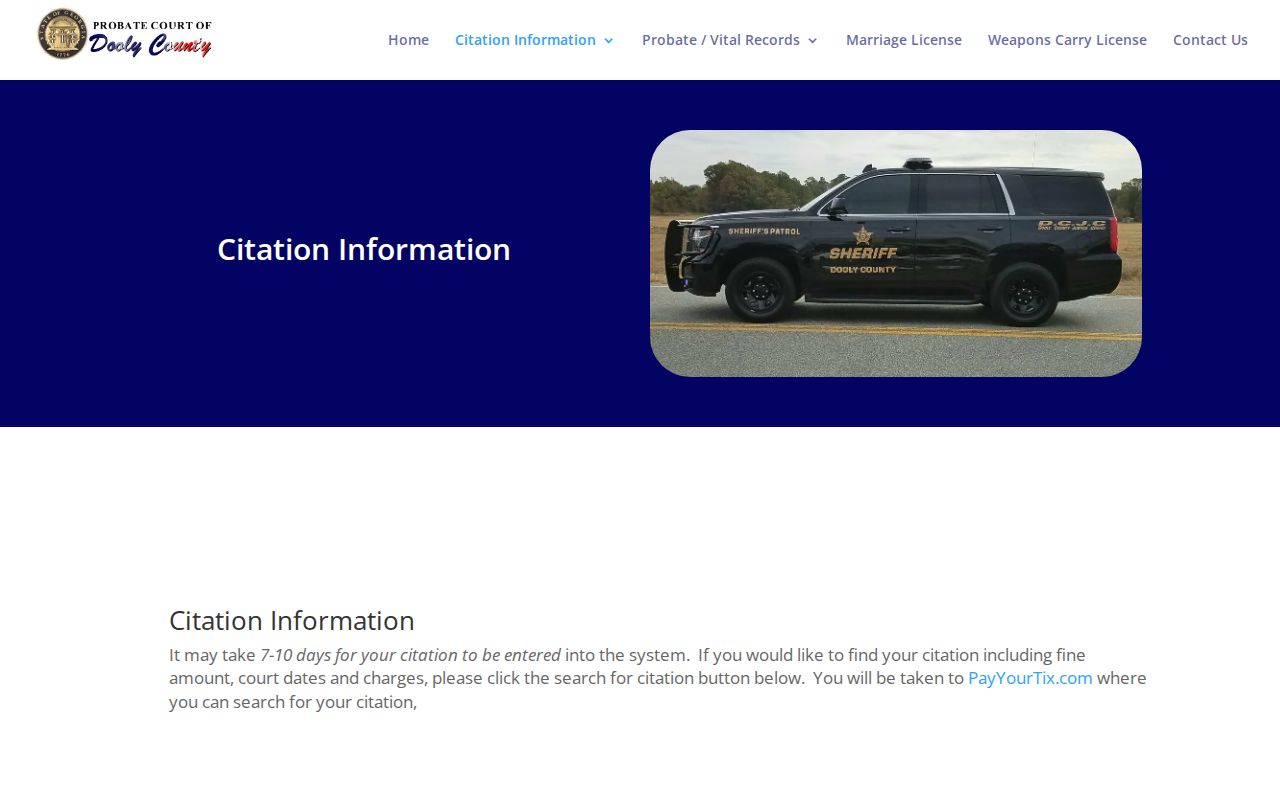
The Dooly Probate citation page shows why a local form or lookup should never be mistaken for a Superior civil docket. Different court, different process.
What Cases Fill the Civil Docket
Dooly civil records span several court classes. These categories are examples from the local court structure, not a complete case list.
- General civil, contract, debt, property, title, and tort matters in Superior Court.
- Domestic-relations matters such as divorce, custody, support, legitimation, and related filings.
- Magistrate claims within the current monetary limit, dispossessory matters, and other lower-court proceedings.
- Probate estates, wills, guardianships, and special proceedings.
- Appeals or transfers that move a matter between a lower court and a higher court.
Read the court name and initiating document rather than a broad keyword. A petition may be a domestic, probate, or guardianship filing, while a complaint usually signals a general civil action.
Dooly Probate’s Public Vault
The Dooly Probate site says its records date to 1875. Most are open for research during office hours. One exception: wills deposited for safekeeping. Those are sealed in an envelope and kept in the vault. They are not public. An estate or civil search cannot rely on the Superior provider alone for that reason.
The same office issues vital-record forms, with requirements unlike a civil case request. The birth certificate form lists a $25 certified copy. Each additional copy ordered at the same time costs $5, with valid photo identification required. The death certificate form lists the same amounts. Those fees belong to vital records, not to any Superior civil docket.
Next, the Dooly Probate plea-in-absentia page presents its own form workflow. That is a separate process from civil filings.
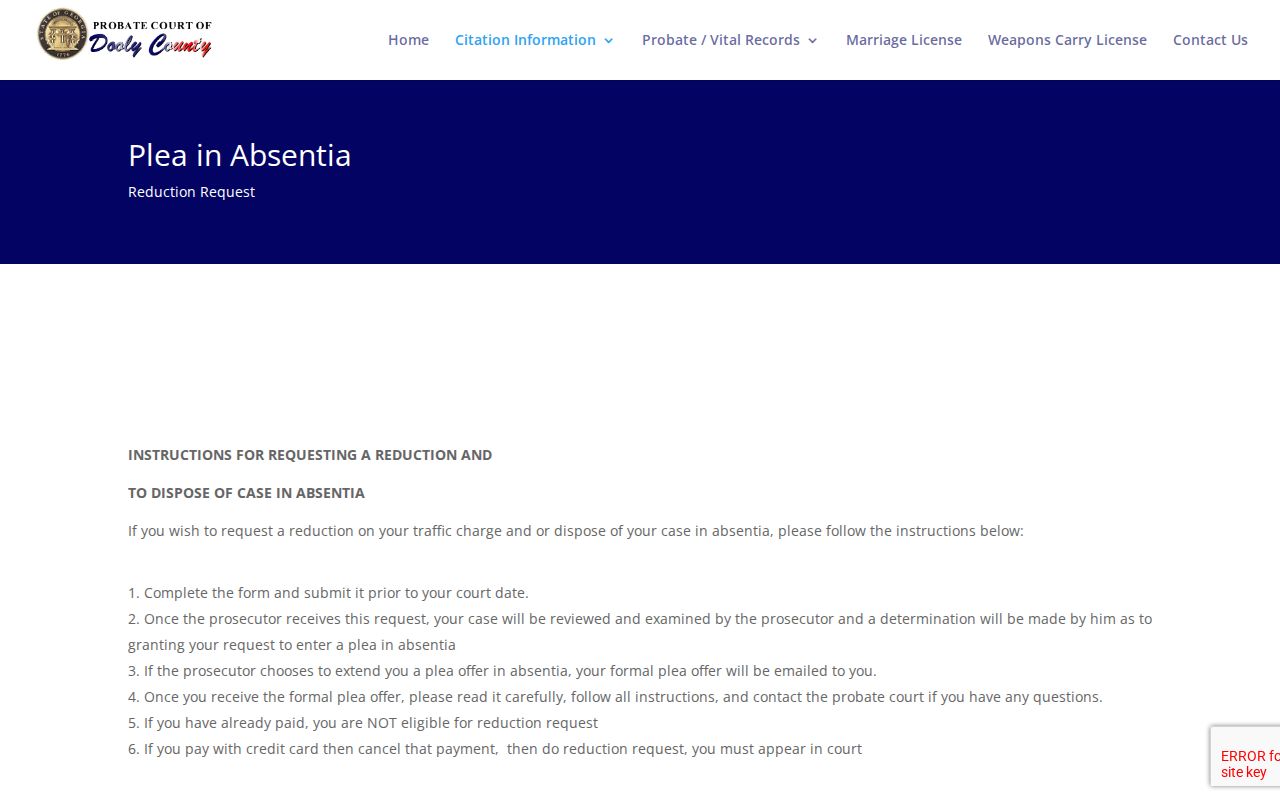
That plea-in-absentia form asks for a citation, charges, and court-date information. It is not a civil filing portal, so keep the court class and document type straight before sending personal details anywhere. For vital records instead, the Dooly Probate birth-certificate request page is the form the office actually uses.
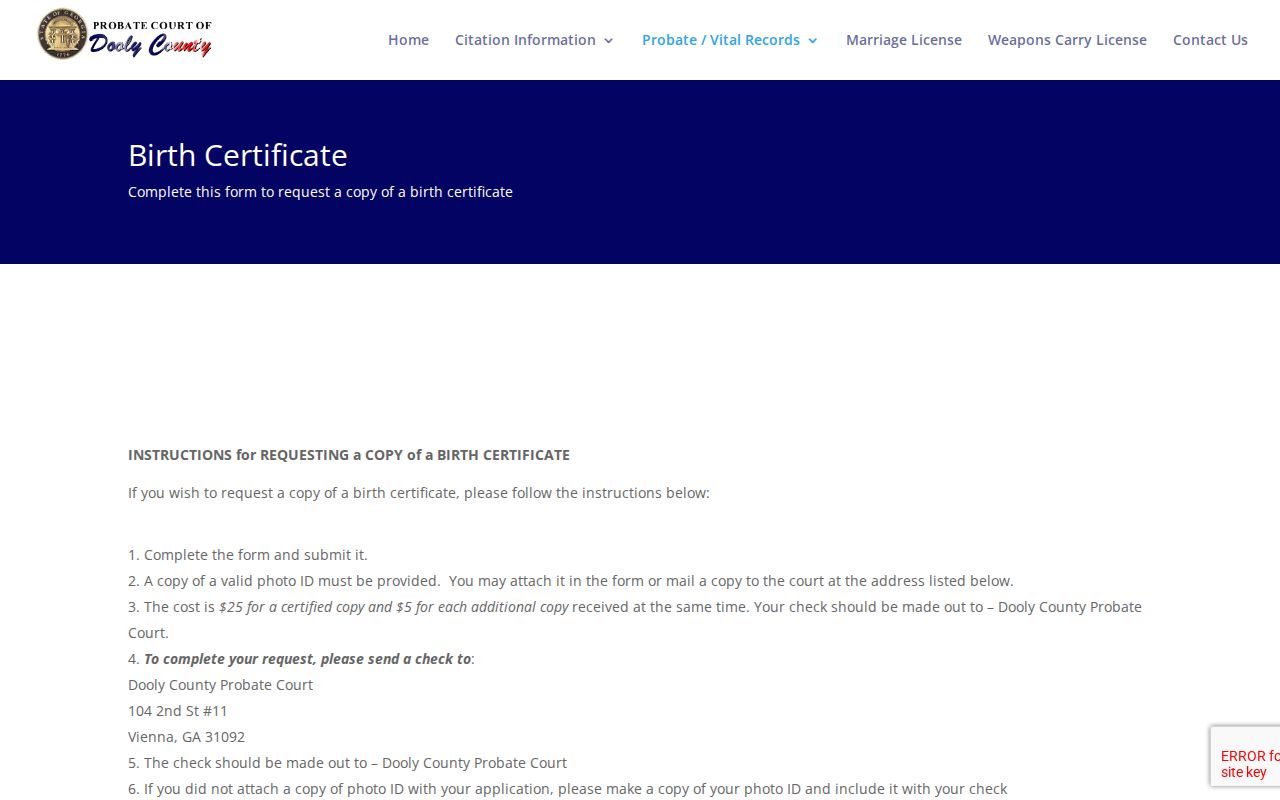
A form tells you what a record costs. It rarely shows what the docket holds. Before you rely on one, ask the clerk what record the form creates and whether that record stays open to the public.
Vital records run on their own track. The Dooly County Probate death-certificate request page spells out its own eligibility rules and copy steps, apart from any civil case docket in Probate.
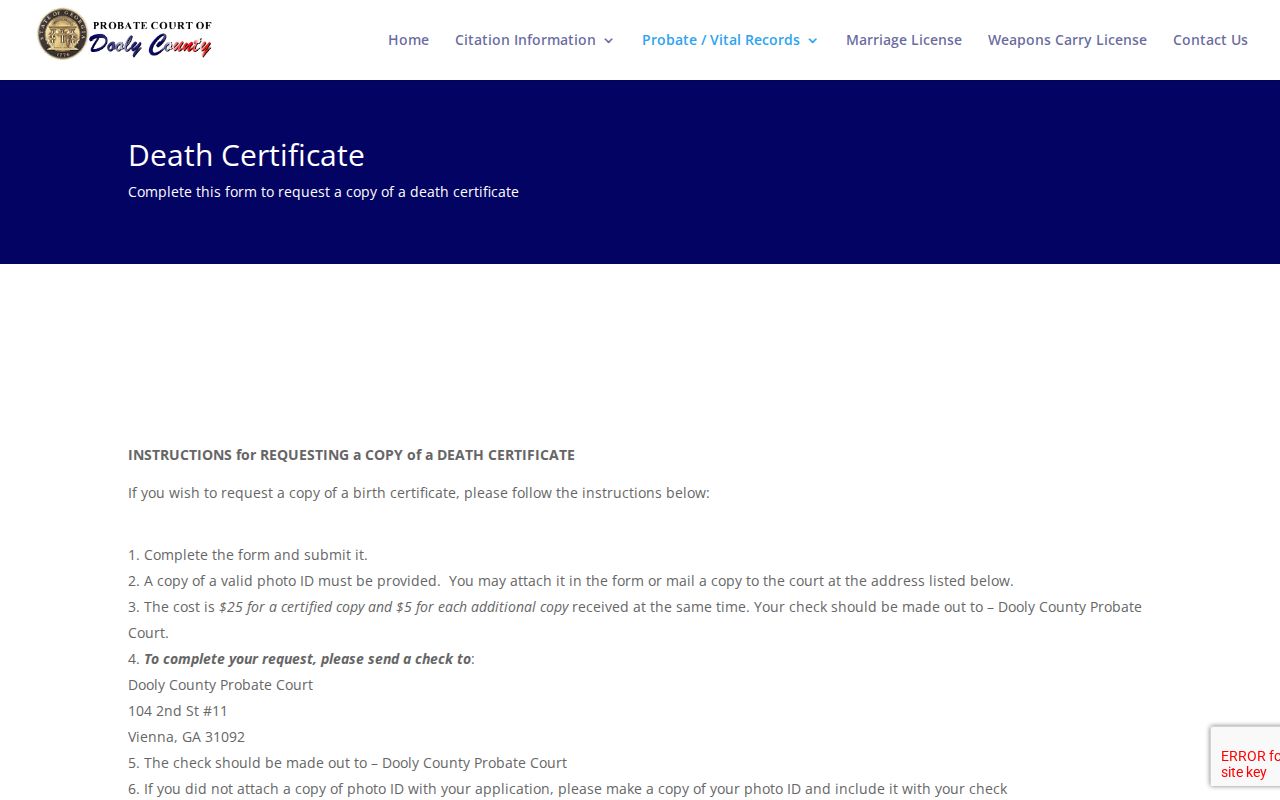
A death-certificate form can point you to the right Probate office. That is all it does. It proves nothing about a civil filing, a hearing, or a judgment.
Hearings on the Civil Docket
A civil setting covers many things. It might be a motion hearing, mediation, a pretrial event, trial, or a calendar call. Georgia Uniform Superior Court Rule 8.3 lays out the calendar fields as place, date, and time. Rule 8.5 adds a warning worth knowing. A scheduled trial does not vanish just because both lawyers agree to move it. The court itself directs any change.
So compare the docket entry against the summons, the order, or the mailed notice. Did a date shift? Ask whether it was continued, reset, vacated, or just updated administratively. One setting dropping off does not end the case. For the full date route, use the Dooly County court schedule. Then confirm with the clerk as the date draws near.
Dooly’s January and July Terms
Terms are changing in this circuit. HB 1121 takes effect July 1, 2026. It moves the Cordele Judicial Circuit Superior terms for Ben Hill, Crisp, Dooly, and Wilcox Counties to January 1 and July 1. A term is just an administrative period for the court. It is not a hearing date for your case. It is not a filing deadline, and no promise the case gets called on day one.
Why does this matter? Because calendars, older notices, and court-history entries may reflect the old terms. The statute does not erase a setting printed on an order. Check the current event with the Clerk of Superior Court or the court's calendar process. That matters most when a case crosses a term boundary. The Georgia Courts enacted-legislation document carries the full summary.
Who Can See Civil Dockets
Georgia's Open Records Act and Uniform Superior Court Rule 21 set a baseline. Court records are public unless law says otherwise. Sealing, redaction, protected identifiers, juvenile confidentiality, and adoption limits all still apply. A docket entry is not the whole file. Seeing one does not entitle you to every exhibit or image.
Access points
Georgia Attorney General request guidance recommends a precise written request to the record custodian and explains estimates, response timing, redaction, and copying.
Uniform Superior Court Rule 21 sets the process for a court-access limitation and requires a stated scope, duration, and reason.
Current Attorney General FAQ guidance explains that a custodian should identify the legal exemption for a denial and provide non-exempt portions when possible.
Making a request is simple if you are specific. Name Dooly Superior Court, or the Probate or Magistrate office involved. Give the case number and date range. Say whether you want inspection, a plain copy, an electronic image, or certification.
The Old Magistrate Form Needs Care
Dooly County still hosts a March 20, 2012 Magistrate request form for a default judgment, release of stay, or FI Fa. It asks for party addresses, original case number, claim amount, filing fee, payments, attorney fees, and total judgment. Those old fields teach you what a judgment file may hold. Nothing more.
Treat the fees as history. The form lists $5 for a Superior Court check and $4 for a Magistrate Court check. Those amounts are no longer current. Its address and contact details also clash with the present Magistrate page. The current office sits at 104 South Second Street, Room 11. Call 229-268-4217 to confirm the live form. Ask about the fee and submission route too.
A historical form is a clue. It is not proof that today's filing workflow is unchanged. The sitting clerk or court controls the request.